Turtlemint IPO Review: Tracking the Shift from ₹15 to ₹2 GMP and What It Means
Turtlemint IPO Review: Tracking the Shift from ₹15 to ₹2 GMP and What It Means
 Mukesh Rathod
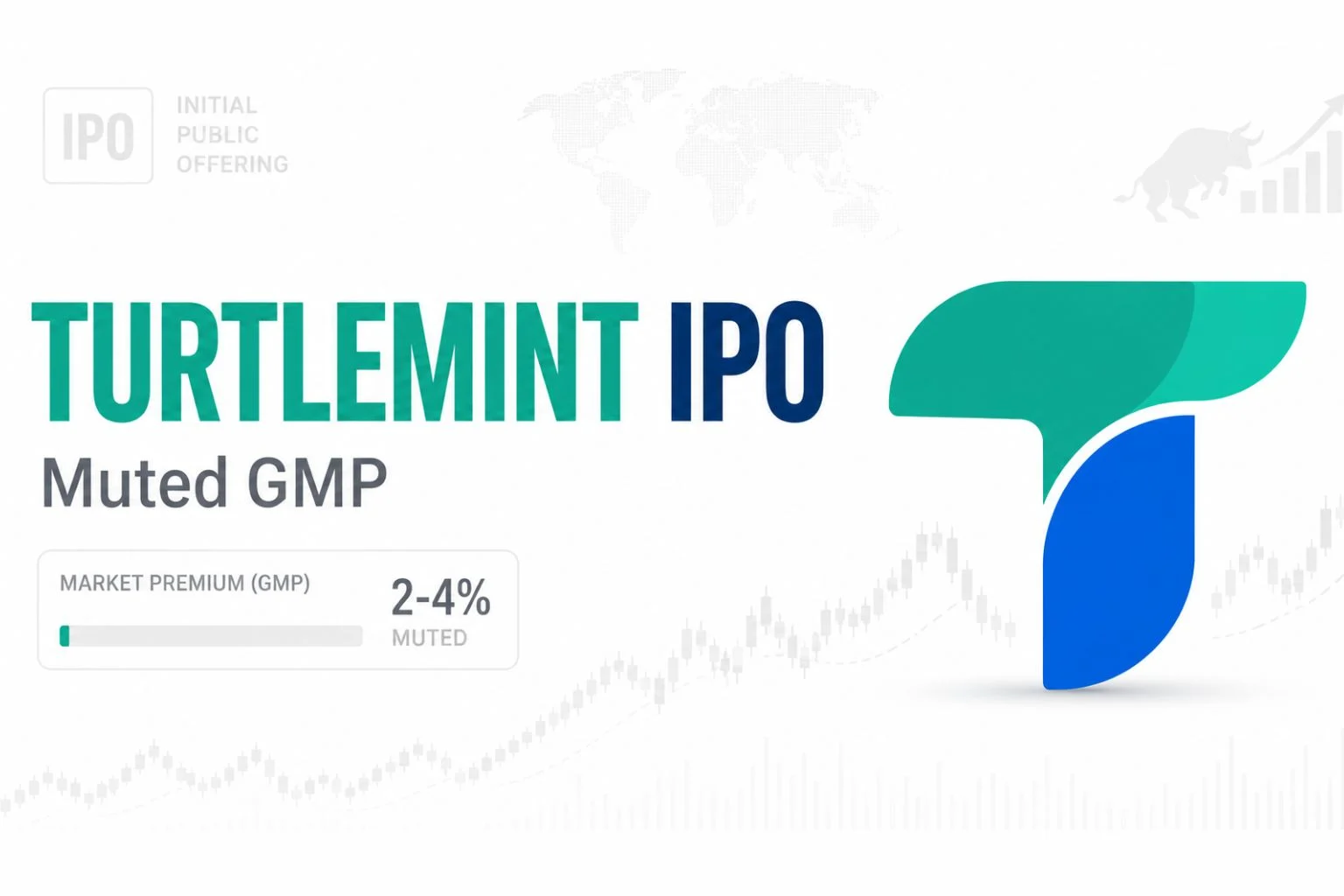
The Turtlemint Fintech IPO GMP has collapsed from ₹15 to ₹2 per share in six days. That single data point has convinced most retail investors that this issue is dead on arrival. But the number that actually tells you where this IPO is headed is not the GMP. It is the 0.73x QIB subscription figure sitting next to a 0.01x NII number on the same subscription table.
The gap between institutional and non-institutional demand is not normal. It is diagnostic. Qualified institutional buyers, the investors with dedicated research teams and access to management, are bidding while high-net-worth individuals are staying away entirely. That asymmetry is the story.
The market is not rejecting this IPO. It is splitting into two completely different assessments of the same company, and understanding why is the difference between a bad investment decision and an informed one.
Key Takeaways
- Turtlemint Fintech IPO GMP stands at ₹2 as of June 22, down from ₹15 on June 16, signalling near-zero listing gain expectations.
- The IPO is subscribed 0.49x overall on Day 2, but the QIB portion alone is at 0.75x while the NII portion is at a near-zero 0.02x.
- The company is seeking a market capitalisation of over ₹4,500 crore at the upper price band of ₹152, despite being loss-making with a negative return on net worth of 47.29%.
- Brokerage views are split: long-term bulls cite the 5 lakh-plus PoSP advisor network and B30+ market penetration; sceptics flag the 81% revenue decline in FY24 and dependence on partner payouts for 70-77% of expenses.
- The IPO closes June 23, allotment is June 24, and listing on NSE and BSE is June 29. The 5-day gap between allotment and listing is longer than typical and matters for short-term liquidity planning.
Turtlemint Fintech IPO: The Key Numbers at a Glance
| Parameter | Detail |
|---|---|
| IPO Price Band | ₹144 – ₹152 per share |
| Total Issue Size | ₹882.67 crore |
| Fresh Issue Component | ₹660.72 crore |
| Offer for Sale (OFS) Component | ₹221.95 crore |
| Lot Size | 98 shares |
| Minimum Retail Investment | ₹14,896 (1 lot at upper band) |
| Market Cap at Upper Band | Over ₹4,500 crore |
| IPO Opening Date | June 19, 2026 |
| IPO Closing Date | June 23, 2026 |
| Allotment Date | June 24, 2026 |
| Listing Date | June 29, 2026 (NSE & BSE) |
| GMP as of June 22 | ₹2 (approximately 1% premium) |
| Overall Subscription (Day 2) | 0.49x |
| QIB Subscription (Day 2) | 0.75x |
| Retail Subscription (Day 2) | 0.43x |
| NII Subscription (Day 2) | 0.02x |
Why the GMP Trajectory Tells You More Than the GMP Number
The grey market premium for Turtlemint opened at ₹15 on June 16, three days before the IPO opened for subscription. By June 17, it had crashed to ₹6. By June 19, the opening day of the issue, it stood at ₹2.30. Today, June 22, it is ₹2.
This is not a low but stable GMP. This is a GMP in freefall. The rate of decline matters because it tells you the grey market was initially pricing in optimism that dissolved the moment actual subscription data arrived. The retail investor who bought unlisted shares at a ₹15 premium on June 16 is already sitting on a notional loss before the stock has even listed.
Having tracked grey market premiums across hundreds of IPOs over the years, I have observed that a collapsing GMP during the subscription window is a more reliable signal than a low but steady GMP. A steady low premium often reflects genuine indifference. A falling premium reflects active disappointment. The two are not the same. This IPO falls into the second category.
What the Subscription Split Reveals About Who Actually Believes in This Story
The headline subscription number of 0.49x overall looks weak. But the component-level data exposes something far more interesting. The QIB portion is subscribed 0.75x. The NII portion is subscribed 0.02x. That is not a gap. That is a chasm.
Qualified institutional buyers include mutual funds, insurance companies, and foreign portfolio investors. These are entities that received the anchor allocation of ₹397.20 crore from 32 investors including ICICI Prudential Mutual Fund, Mirae Asset, BNP Paribas, and Societe Generale. They have access to the company’s management, detailed financial models, and sector analysts. They are bidding.
Non-institutional investors, the category that includes high-net-worth individuals and corporates deploying surplus capital, have submitted bids for barely 2% of the shares reserved for them. This group typically chases listing gains. They are not chasing this one.
The retail subscription at 0.43x is modest but not catastrophic. It suggests a small base of retail investors is applying, likely those with a long-term view or those who do not track GMP movements closely. The near-total absence of NII interest is the market’s verdict on listing-day returns. The QIB presence is the market’s verdict on business fundamentals. The two verdicts are not contradictory. They are about different time horizons.
The Three Brokerage Positions That Frame the Entire Debate
The analyst community is not just divided on this IPO. It is divided along precisely the lines that matter most to an investor deciding whether to apply.
1. The Structural Bull Case (SMIFS: Subscribe for Long Term)
SMIFS recommends the IPO based on Turtlemint’s position as India’s largest certified PoSP network with over 5.07 lakh advisors and 6.32 lakh digital partners. More than 75% of platform premiums originate from B30+ markets, meaning the company is not just another urban fintech player. It has distribution depth in smaller towns where insurance penetration is genuinely low and the addressable market is real.
The brokerage also highlights a retention metric that most competitor articles have not mentioned: advisor earnings for the FY20 cohort grew 2.8 times by FY25, with a two-year retention rate of 69.5%. This is the number that matters for a distribution business. If advisors stay and earn more over time, the network is not just large. It is productive.
The company has 45 insurer partnerships and is expanding into mutual fund distribution with assets worth ₹12,800 crore and loan distribution. The bull case rests on this network becoming a multi-product distribution engine where the cost of acquiring a customer is spread across multiple revenue lines over time.
2. The Profitability Sceptic (Swastika Investmart: Caution)
Swastika Investmart has flagged the numbers that make the bull case uncomfortable. The company has a negative return on net worth of 47.29%. It is loss-making. The valuation at the upper price band is approximately 6.8 times FY25 revenue, which is not cheap for a company that has not demonstrated it can convert scale into profit.
The brokerage also points to revenue volatility, specifically an 81% year-on-year revenue decline in FY24. This is the data point that most retail investors are not seeing because the growth narrative focuses on network size and market opportunity. An 81% revenue drop in a single year is not a normal fluctuation for a growth-stage company. It demands an explanation that the IPO documents may or may not provide to the satisfaction of a cautious investor.
The expense structure adds another layer of concern. Digital partner payouts account for 70-77% of total expenses. This means profitability is not a matter of incremental margin improvement. It is structurally dependent on whether the company can reduce the share of revenue it must pass through to its advisor network. That is a business model question, not a scale question.
3. The Neutral Observer (Beacon Capital Advisors: Neutral)
Beacon Capital Advisors has taken a position that is neither bullish nor bearish but focused on a detail that should matter to every applicant. A significant portion of the IPO proceeds will be used for employee salaries, cloud and server infrastructure, marketing expenses, lease obligations, and working capital for the subsidiary.
The use of fresh issue proceeds for operating expenses rather than for capital expenditure or debt reduction is not inherently negative. Growth-stage companies routinely use IPO funds this way. But it does mean the investor is funding the income statement rather than the balance sheet. The company is not asking for capital to build a new asset. It is asking for capital to cover its running costs while it tries to reach profitability. That distinction matters for how an investor should think about the risk of the issue.
The Question Every Competitor Article Left Unanswered
After reading every available analysis of this IPO, one question remains unaddressed. Why is the NII subscription at 0.02x when the QIB subscription is at 0.75x, and what does that specific gap predict about listing day?
The answer lies in the mechanics of how these two investor categories behave. NIIs apply for IPOs almost entirely on leverage. They borrow short-term funds to place large bids, intending to sell on listing day and repay the loan while pocketing the gain. A 1% grey market premium does not cover the interest cost of that leverage. The math eliminates the trade entirely. NIIs are not bearish on Turtlemint. They are rationally responding to an interest rate arbitrage that has closed.
QIBs do not use leverage in the same way. They allocate from diversified portfolios with multi-year horizons. They are buying the business, not the listing pop. The 0.75x QIB subscription therefore tells you that sophisticated long-term capital sees value at ₹152 per share. It does not tell you that the stock will list above ₹152. Those are two entirely different predictions.
The most widespread misconception in the public conversation is that a low GMP means the company is poor quality. The data suggests something more precise. A low GMP means the short-term money has left the building. The long-term money is still at the table. Whether you should join them depends entirely on your time horizon, not on the GMP.
The Forward View: What to Watch Between June 23 and June 29
The subscription window closes June 23. The allotment date is June 24. The listing date is June 29. The five-day gap between allotment and listing is longer than the typical two to three days for mainboard IPOs. This gap matters for short-term investors because it extends the period during which capital is locked with no price discovery. Any negative market movement or sector-specific news during those five days lands entirely on the investor.
The final subscription figures on Day 3 will be the most important data point before listing. If the QIB portion crosses 1x and the NII portion remains near zero, the stock will list with an institutional shareholder base and very little speculative retail money. That combination has historically produced less listing-day volatility but more stable post-listing price discovery.
The long-term question on Turtlemint is not whether the network is large. It is large. The question is whether the company can reduce the 70-77% of revenue that flows to partner payouts while still growing the advisor base. If it can, the operating leverage in this model is significant and the current valuation will look cheap in hindsight. If it cannot, the company will remain a high-volume, low-margin distribution business indefinitely. The IPO does not answer that question. Only the next four quarters of financial disclosures will.
The aspect of this IPO that looks minor in the data is the one with the most direct impact on ordinary retail investors. The minimum investment of ₹14,896 is accessible. The 1% GMP suggests flat listing. The institutional demand suggests underlying value. The decision comes down to a simple question no brokerage report can answer for you. Are you investing for June 29, or are you investing for June 2029?
Frequently Asked Questions
What is Turtlemint Fintech IPO GMP today?
Answer: The Turtlemint Fintech IPO GMP stands at approximately ₹2 per share as of June 22, 2026. This translates to a premium of about 1% over the upper price band of ₹152, indicating expectations of a near-flat listing. The GMP has declined sharply from ₹15 on June 16, reflecting the grey market’s adjustment to weak subscription figures particularly from the NII category.
Is Turtlemint IPO good for listing gains?
Answer: Based on the current GMP of ₹2 and the near-zero NII subscription at 0.02x, the probability of meaningful listing gains is low. NII investors, who typically drive listing-day demand through leveraged applications, have largely stayed away because the 1% premium does not cover their funding costs. Investors applying solely for a listing pop should factor in this reality. The QIB subscription of 0.75x suggests institutional confidence in long-term value, not short-term price movement.
What is the minimum investment amount for Turtlemint IPO?
Answer: The minimum investment for a retail individual investor is ₹14,896. This is calculated based on one lot of 98 shares at the upper price band of ₹152 per share. For small NIIs, the minimum investment is 14 lots, which amounts to approximately ₹2.09 lakh. For large NIIs, the minimum is 68 lots, amounting to approximately ₹10.13 lakh.
Categories
- Falling Shares 3
- News 2
- IPO 2